
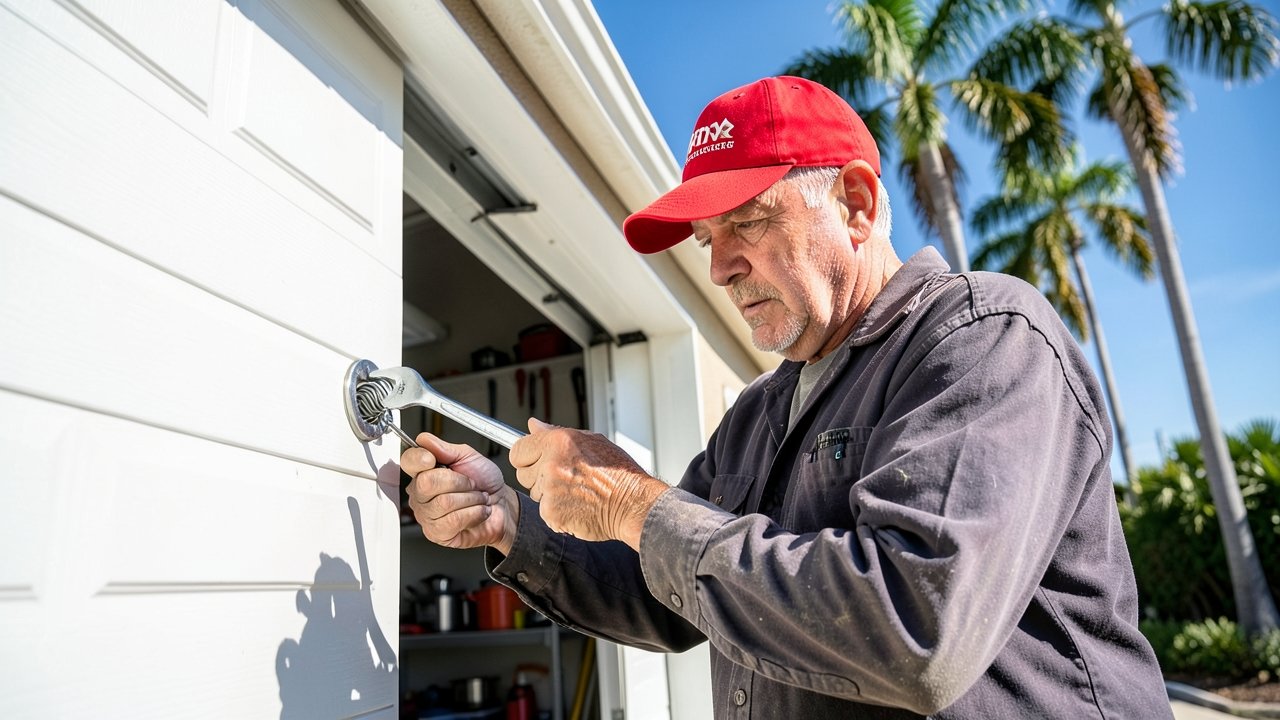
Why Garage Door Springs Fail More Often in Florida’s Humidity and How to Spot It Early
Key Facts About Garage Door Safety and Standards
- The U.S. Consumer Product Safety Commission recommends testing a garage door's automatic reversing mechanism monthly by placing a 2-inch block in its path — if the door doesn't reverse within 2 seconds of contact, the opener should be disconnected until repaired.
- According to the Door & Access Systems Manufacturers Association (DASMA), a properly balanced garage door should lift with roughly 8-10 pounds of manual force when disconnected from the opener — anything heavier signals a spring or balance problem.
- Per the Florida Building Commission's wind-borne debris region code, Miami-Dade and Broward Counties require every garage door to meet large-missile impact ratings, regardless of whether the door has windows.
The standard advice on garage door spring replacement can be misleading in Florida — and it has nothing to do with how old the springs are. Most people think springs just wear out over time, but the real driver here is Florida’s unique environment, especially the humidity and salty air.
If you’re dealing with a garage door malfunction, the springs are often the culprit, but rushing into replacing them without knowing what’s really going on can cost you more in the long run. Moisture accelerates wear and tear in ways that most generic guides don’t cover.
Garage door springs fail more often in Florida’s high humidity because moisture accelerates metal corrosion and weakens spring tension over time. Early signs include unusual creaking sounds, slower door movement, and visible rust or gaps in the springs, indicating the need for prompt inspection or replacement.
The Part Most Companies Skip: Assessing Garage Door Springs for Humidity Damage
Most companies tell you to replace springs based on age or number of cycles, which sounds logical, but in Florida, waiting until the spring breaks often leads to bigger problems like cables snapping or the door going off track. The high humidity here causes metal fatigue and corrosion much faster than in drier climates, even if the springs look fine on the surface.
This means a spring can look intact but be dangerously weakened. Inspecting for small rust spots, loss of tension, or rough noises during operation are important early warning signs. Waiting for a full break can lead to emergency garage door repair Florida calls that could have been avoided with a little proactive maintenance.
Why Garage Door Malfunction Troubleshooting in Florida Needs a Local Eye
After a storm, a common pattern is bent tracks and water damage around the garage door panels, especially in areas where drainage can be tricky. Storm winds can push doors off their tracks, but water seeping into the door’s bottom can cause swelling and warping that messes up opener alignment.
A lot of garage door opener repair jobs involve fixing damage that started with a simple spring or cable issue but escalated because moisture wasn’t addressed. That’s why moisture checks and track alignment should be part of every service call. A garage door cable repair service isn’t just about the cable — it’s about making sure the whole system is sound.
Signs You Need Garage Door Repair: A Diagnostic Checklist
How to fix garage door not opening starts with knowing what signs to look for. Here are the key warning signs homeowners should watch for:
- The door is slow or jerky when moving.
- You hear loud creaking or snapping sounds during operation.
- The door won’t stay open or falls suddenly.
- Visible rust or corrosion on springs or cables.
- The door panels have dents or warping, especially near the bottom.
- The tracks look bent or the rollers don’t roll smoothly.
If you spot even a couple of these, it’s time for a garage door repair Florida pro. Ignoring these early signals can quickly turn into a full panel replacement Florida job — which costs a lot more than a spring or cable fix.
Why DIY Garage Door Malfunction Troubleshooting Can Backfire
DIY fixes for garage door spring replacement or cable repair aren’t recommended. The springs on these doors are under extreme tension, and a mistake can cause serious injury or damage. OSHA classifies overhead spring tension as a recognized workplace hazard for a reason — it’s not just about tools; it’s about knowing exactly how to relieve tension safely.
Besides safety, improper DIY fixes often lead to uneven tension, which damages the opener and door panels. That’s why emergency garage door repair is available 24 hours a day, with same-day service for urgent calls to help keep things safe and prevent more costly breakdowns.
How Florida’s Climate Shapes Garage Door Maintenance
Humidity in Florida isn’t just a comfort issue — it’s a direct factor in how garage doors and their components age. Belt-drive openers, like LiftMaster’s belt-drive models, tend to hold up better in humid climates than chain drives, which are more prone to rust and squeaking over time.
Here are a few maintenance tips to keep doors running smooth year-round:
- Lubricate springs and rollers at least twice a year with a silicone-based lubricant to resist moisture buildup.
- Check and tighten bolts and brackets after storms or high winds.
- Inspect weatherstripping and replace if cracked to keep out moisture and pests.
- Test the balance of the door by disconnecting the opener and manually lifting halfway — it should stay put without dropping.
Following these simple steps can prevent common issues that lead to emergency garage door repair Florida calls, especially during hurricane season.
What a Fair Price Actually Looks Like for Garage Door Repair in Florida
How much does garage door repair cost in Florida? Most of these jobs run between $150 and $450 locally, depending on what’s needed. Spring replacement usually sits in the middle of that range. Panel replacement Florida jobs typically go higher, depending on material and style.
Free estimates are provided on every job, with honest upfront guidance if something isn’t worth fixing — surprise bills shouldn’t be part of garage door repair. Every repair also comes with a 2-year warranty on labor, a stronger guarantee than what’s standard in the industry.
FAQ: Common Questions About Garage Door Malfunctions
- How do I know when to replace garage door springs? If you notice loud noises, slow response, or visible rust, it’s time. Springs usually last about 10,000 cycles, but Florida humidity can cut that short.
- Is it safe to adjust springs myself? No. These springs are under high tension and can cause injury. Leave it to a licensed technician.
- What causes garage doors to go off track? Usually a combination of bent tracks, worn rollers, or damaged cables. Storms in Florida often trigger this problem.
Garage doors are more than just convenience. They’re your home’s first line of defense. If you notice any malfunction, don’t wait — everything from garage door off track repair to opener repair and cable replacement is handled with real Florida expertise.
Most Clopay springs that fail in Florida aren’t failing because they’re cheap — it’s the humidity eating at them. A little care and an expert eye can help avoid a big headache down the road.


0 Comments